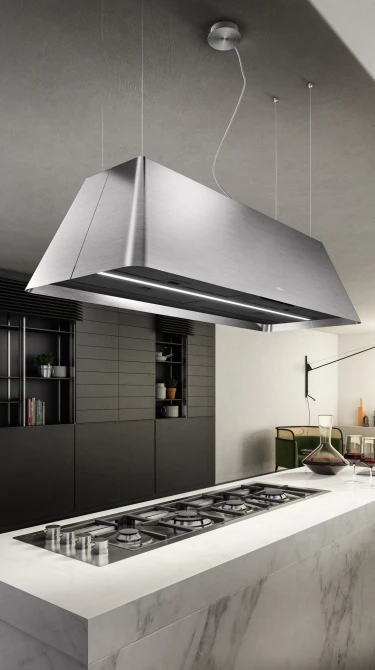
Cooker hood without a flue: how a ductless cooker hood works
A cooker hood is a key element for comfort in the kitchen, helping to manage steam, odours and particles generated whilst preparing meals. However, it is not always possible to install a system connected to a flue or to fit an exhaust duct leading outside.
In these situations, a cooker hood without a flue can be a practical and versatile solution, suitable for a wide range of home layouts and design configurations.
When to choose a ductless cooker hood
Structural constraints, the layout of the rooms or specific design requirements can make it difficult to install a traditional cooker hood connected to the outside.
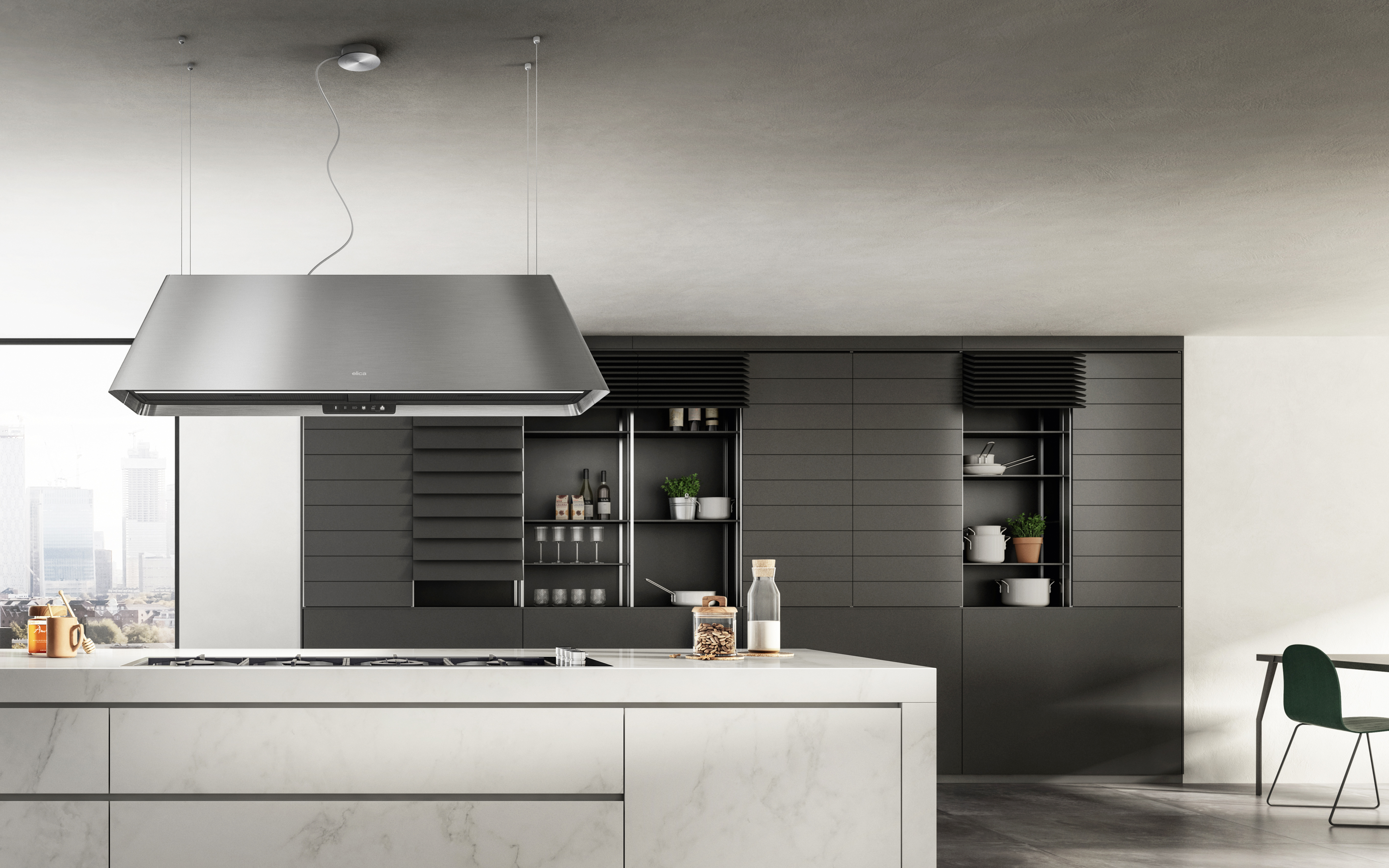
A ductless cooker hood allows you to manage steam and odours without the need to install an air extraction system.
This solution may be particularly suitable in the following cases:
-
flats located in existing buildings;
-
renovations involving limited work on the building services;
-
kitchens installed away from external walls;
-
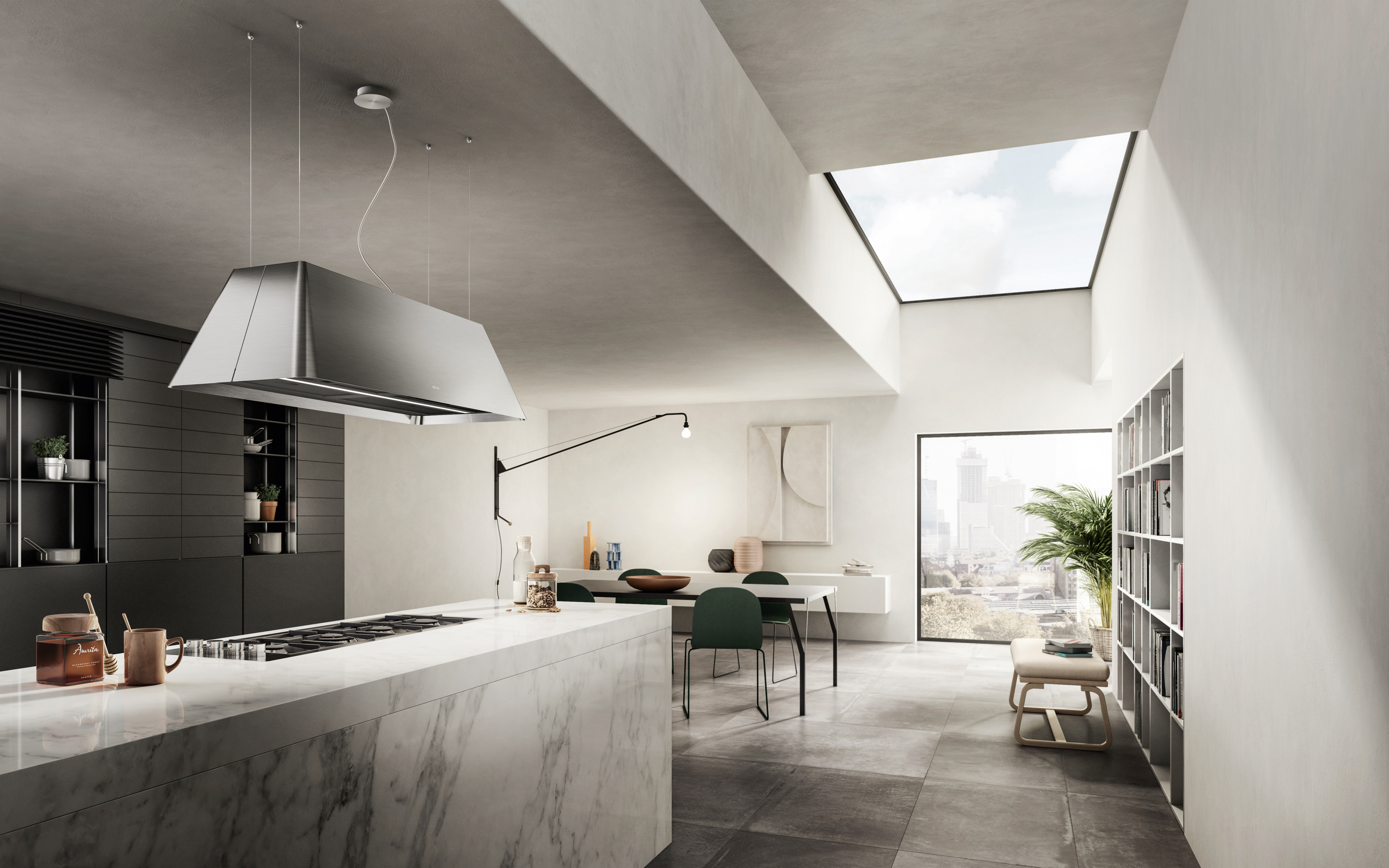
open-plan spaces;
-
projects prioritising aesthetic integration.
The ability to install the hood without creating a connection to the outside offers greater freedom in the design of the kitchen.
Ductless cooker hoods: how do they work?
Unlike traditional extractor hoods, which channel air out of the home, a ductless cooker hood operates via a filtration system.
The process generally takes place in several stages:
1. air is drawn in from above the hob;
2. the filters trap the grease particles generated during food preparation;
3. additional filtration systems contribute to the treatment of the air;
4. the air is recirculated into the kitchen.
This solution is designed to ensure ease of installation and convenience in everyday use.
What are the advantages of a ductless cooker hood?
Modern filtration technologies have made the ductless cooker hood an increasingly popular choice in contemporary kitchens.
The main advantages include:
-
greater design flexibility;
-
simplified installation;
-
no need for building work to install ductwork;
-
the ability to adapt to different kitchen layouts;
-
seamless integration with the décor.
These features make this solution particularly attractive for both new builds and refurbishment projects.
How to choose a ductless cooker hood
When considering a filter-type cooker hood, it is worth taking a few factors into account:
-
type of kitchen;
-
size of the room;
-
how often the hob is used;
-
aesthetic requirements;
-
features of the filtration system;
-
ease of maintenance.
Careful consideration of these factors helps to identify the solution best suited to your needs.
A ductless cooker hood can help to simplify the design of your space and promote greater integration between technology and furnishings, adapting to different interior styles.